2026-10-14 ·
Flushing Sediment From Water Heaters in Older Annapolis Homes
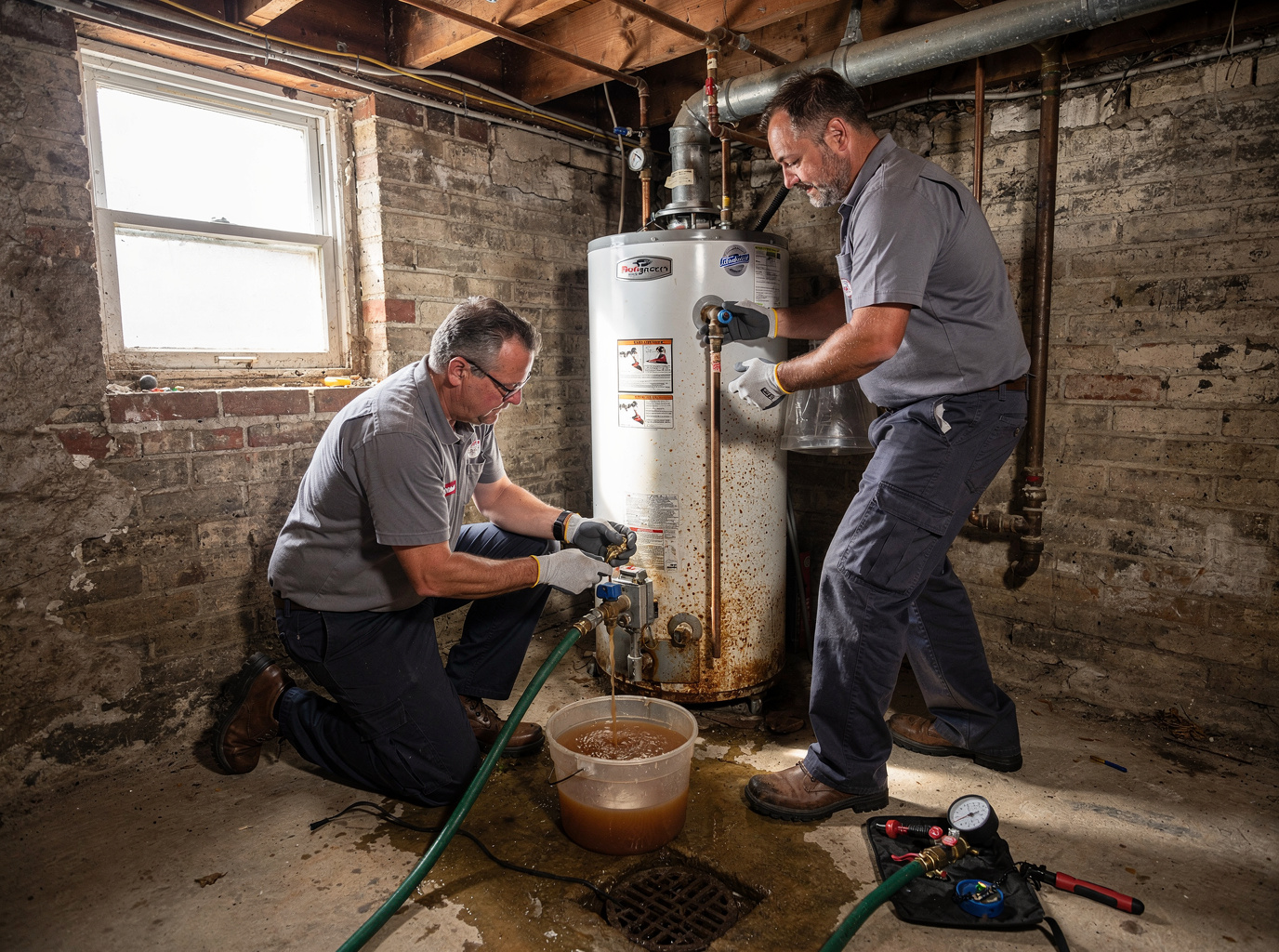
Flushing sediment from a water heater in older Annapolis homes typically takes 45 to 90 minutes and restores 10 to 20 percent efficiency when done every 12 to 18 months. Homes built before 1970 in neighborhoods such as Murray Hill and West Annapolis often contain 40-gallon or 50-gallon tanks with decades of mineral accumulation from Anne Arundel County water drawn near the Chesapeake Bay. The humid subtropical climate brings hot summers that accelerate scale formation while cool winters increase corrosion risk in unconditioned basements common to these properties.
Why Sediment Accumulates Quickly in Historic Annapolis Homes
Homes near the Maryland State House and City Dock sit on older galvanized or copper lines that shed particles into the tank. Chesapeake Bay water carries higher mineral content than many inland supplies, and the combination of summer heat and winter temperature swings speeds up layering inside the tank. In Parole and Admiral Heights, properties from the 1940s through 1960s frequently retain original tanks that have never been flushed, leading to reduced hot-water volume and higher energy use. The terrain around the Severn River also contributes occasional pressure fluctuations that stir up settled sediment. These local conditions differ from newer subdivisions farther from the water where sediment issues appear later in a unit's life.
Recognizing When Flushing Is Needed
Reduced hot-water volume after a 10-minute shower is the most common early sign in Eastport homes. Rumbling or popping sounds during heating cycles indicate steam pockets forming beneath sediment layers. Discolored water at the tap, especially after the unit has sat idle overnight, points to iron or scale release. In older Annapolis stock, these symptoms often appear between year 8 and year 12 rather than the 15-year mark seen in newer construction. Checking the drain valve for gritty flow provides a quick field confirmation before scheduling service.
Step-by-Step Sediment Flush for 40- and 50-Gallon Tanks
Turn off power or gas and close the cold-water inlet. Attach a garden hose to the drain valve and run it to a floor drain or outside. Open a hot-water faucet on the second floor to allow air in, then open the drain valve fully. Let water flow until it runs clear, typically 10 to 15 gallons in these older tanks. Close the valve, refill the tank, bleed air from all fixtures, and restore power. Repeat the process twice if the first flush still shows visible sediment. Homeowners in West Annapolis often perform this task in spring before summer demand rises.
How Local Climate and Water Conditions Affect Frequency
Anne Arundel County's hot, humid summers increase evaporation and mineral concentration inside tanks, while cool winters promote condensation that can worsen corrosion once sediment is present. Properties within a mile of the Chesapeake Bay Bridge or City Dock see slightly higher calcium levels than those in Parole. A once-yearly flush works for most pre-1970 homes, but units located in unheated crawl spaces may need attention every 10 to 12 months. Linking this maintenance to Water Heater Maintenance keeps performance stable without waiting for failure.
When Professional Water Heater Repair Becomes Necessary
If the drain valve is seized or flow remains discolored after two flushes, the dip tube or anode rod may need inspection. Homes in Admiral Heights and Murray Hill sometimes reveal hidden leaks once sediment is removed. In those cases, Water Heater Repair restores safe operation. For units approaching 12 to 15 years, replacement often proves more economical than repeated flushing. Readers dealing with winter issues can review Water Heater Repair Annapolis: Handling Freeze Damage After Cold Snaps for related guidance. Cost considerations near the Bay appear in Cost Factors for Water Heater Repair Near the Chesapeake Bay. Jacob Water Heater Services remains available 24/7 for Annapolis and surrounding Anne Arundel County neighborhoods when flushing reveals problems beyond routine maintenance.